
Blog
The Second World War resulted in the deaths of around 85 million people. Additionally, tens of millions more people were displaced. However, amid all the carnage, people demonstrated remarkable courage, fortitude, compassion, mercy and sacrifice. We want to honour and celebrate all of those people. In the War Years Blog, we examine the extraordinary experiences of individual service personnel. We also review military history books, events, and museums. We also look at the history of unique World War II artefacts, medals, and anything else of interest.
On the Trail of 214 Squadron: A Day Among the Ghosts of 100 Group
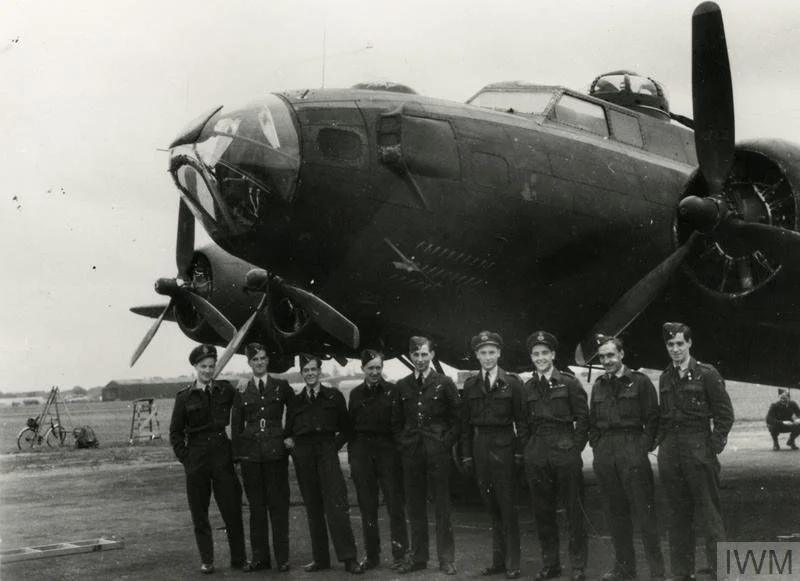
What remains of RAF Oulton and the wartime world of 214 Squadron? In this personal journey through Norfolk, I visit the City of Norwich Aviation Museum, Blickling Hall, and the quiet village of Oulton to explore the history of 100 Group's secret radio war. This article offers a fascinating glimpse into a largely overlooked chapter of Bomber Command history.
On Saturday, August 8, I woke up at 6 a.m. and left the house by 7:30 a.m. I drove 128 miles from Kings Langley in Hertfordshire to Norfolk to visit three sites related to No. 214 (FMS) Squadron and No. 100 (Bomber Support) Group RAF. I am currently researching my third book, and there is no substitute for walking the ground. For the aircrews of Bomber Command, the frontline was the long, tedious, physically and mentally taxing flight to and from a remote, heavily defended target in complete darkness. They never knew when their aircraft might be caught in blindingly intense searchlights (coned), hit by exploding anti-aircraft shrapnel (commonly known as flak), or raked by cannon fire from unseen German night-fighters. For the aircrews of Bomber Command, the stark reality was around a 20 per cent chance of surviving the required 30 operational sorties. For the majority of crews, being shot down meant death. Only a lucky minority found themselves PoWs and fewer still escaped occupied Europe to rejoin their comrades.
City of Norwich Aviation Museum
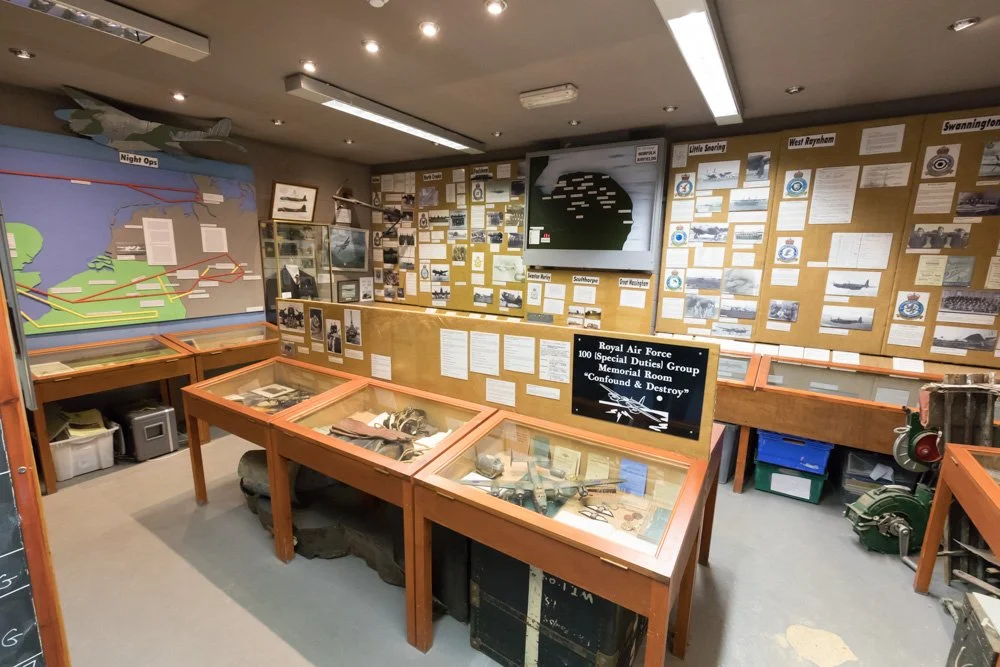
Making good time, my first stop was the City of Norwich Aviation Museum, on the edge of Norwich Airport. This is the official museum of 100 Group, so it holds a large archive of memorabilia, personal accounts and photographs of the group's personnel, aircraft and operations. It is exactly the kind of place a researcher needs.
The museum's indoor displays feature a dedicated RAF 100 Group Room located near the entrance, as well as a collection highlighting the United States 8th Air Force. These exhibits are especially valuable for those interested in the electronic countermeasures used during the radio war. However, the museum primarily relies on static displays, images, and text panels to convey information. This approach may not be very engaging for younger visitors, who typically have shorter attention spans.
To capture the interest of younger audiences, museums should adopt interactive and technology-driven strategies. Effective methods include gamified digital tours, bite-sized multimedia content, hands-on immersive exhibits, and social media-friendly spaces that encourage active participation.
Outside, the museum keeps nearly thirty aircraft, including an Avro Vulcan, a Hawker Siddeley Nimrod, an English Electric Lightning and a SEPECAT Jaguar.
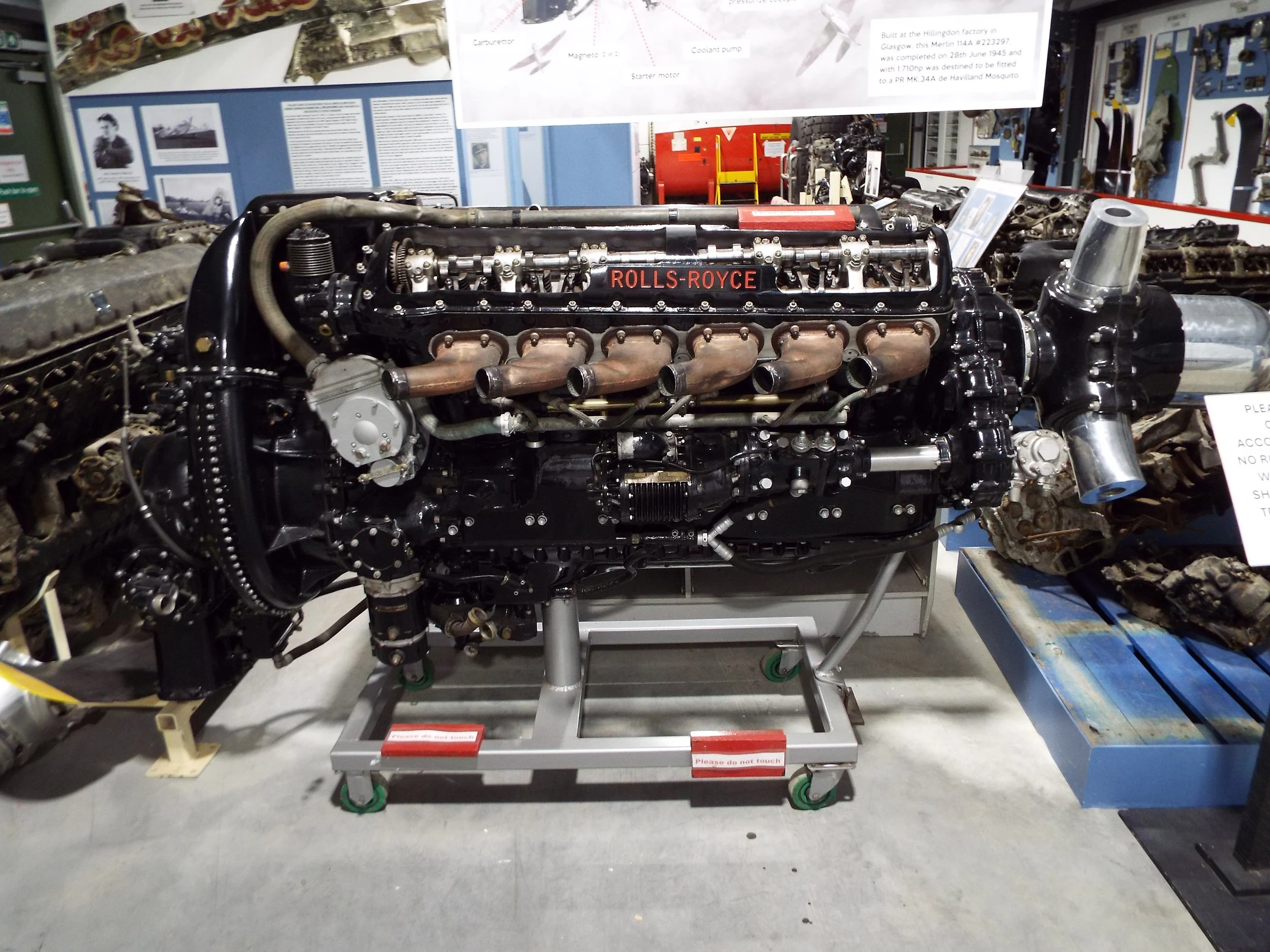
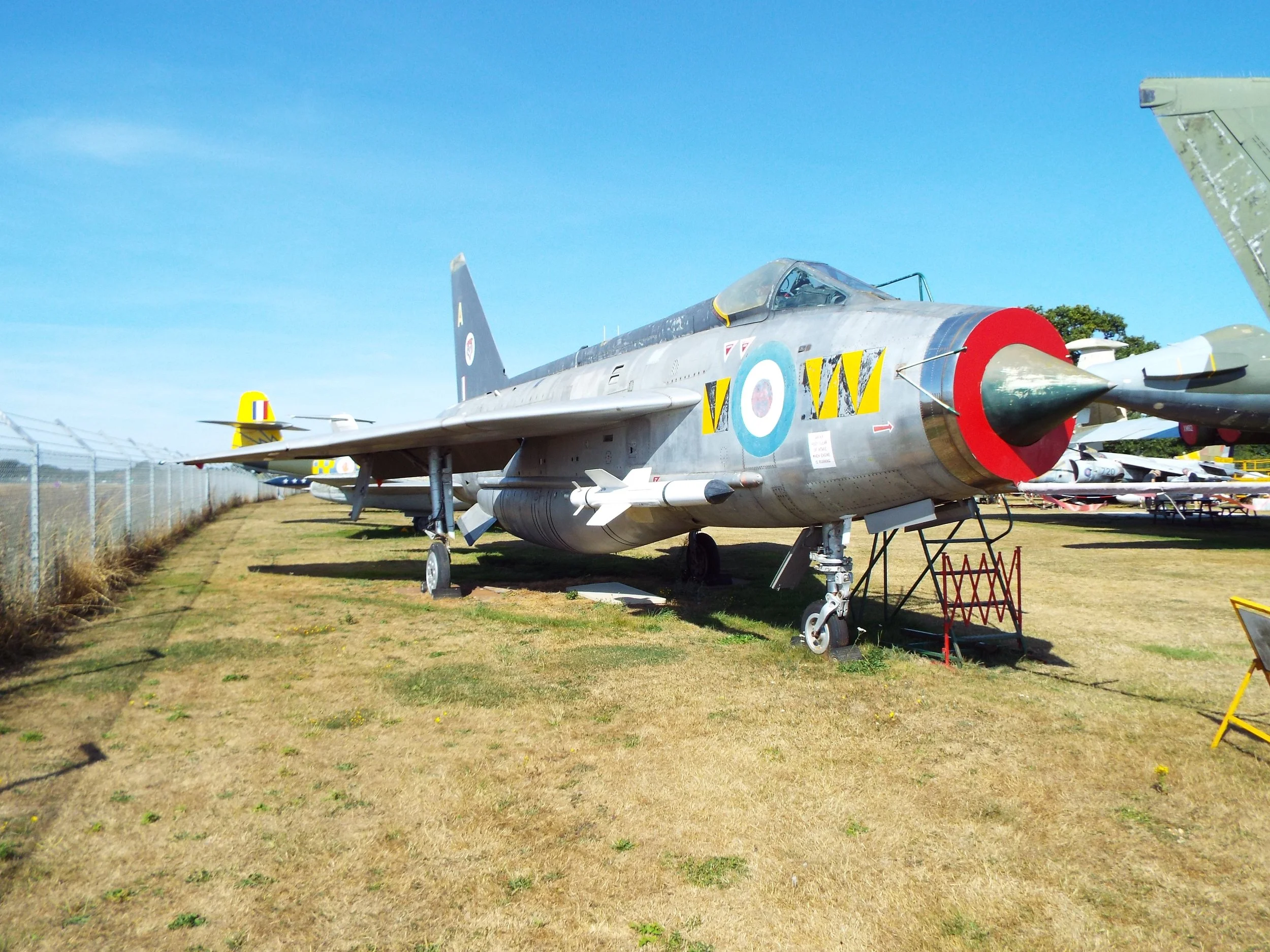
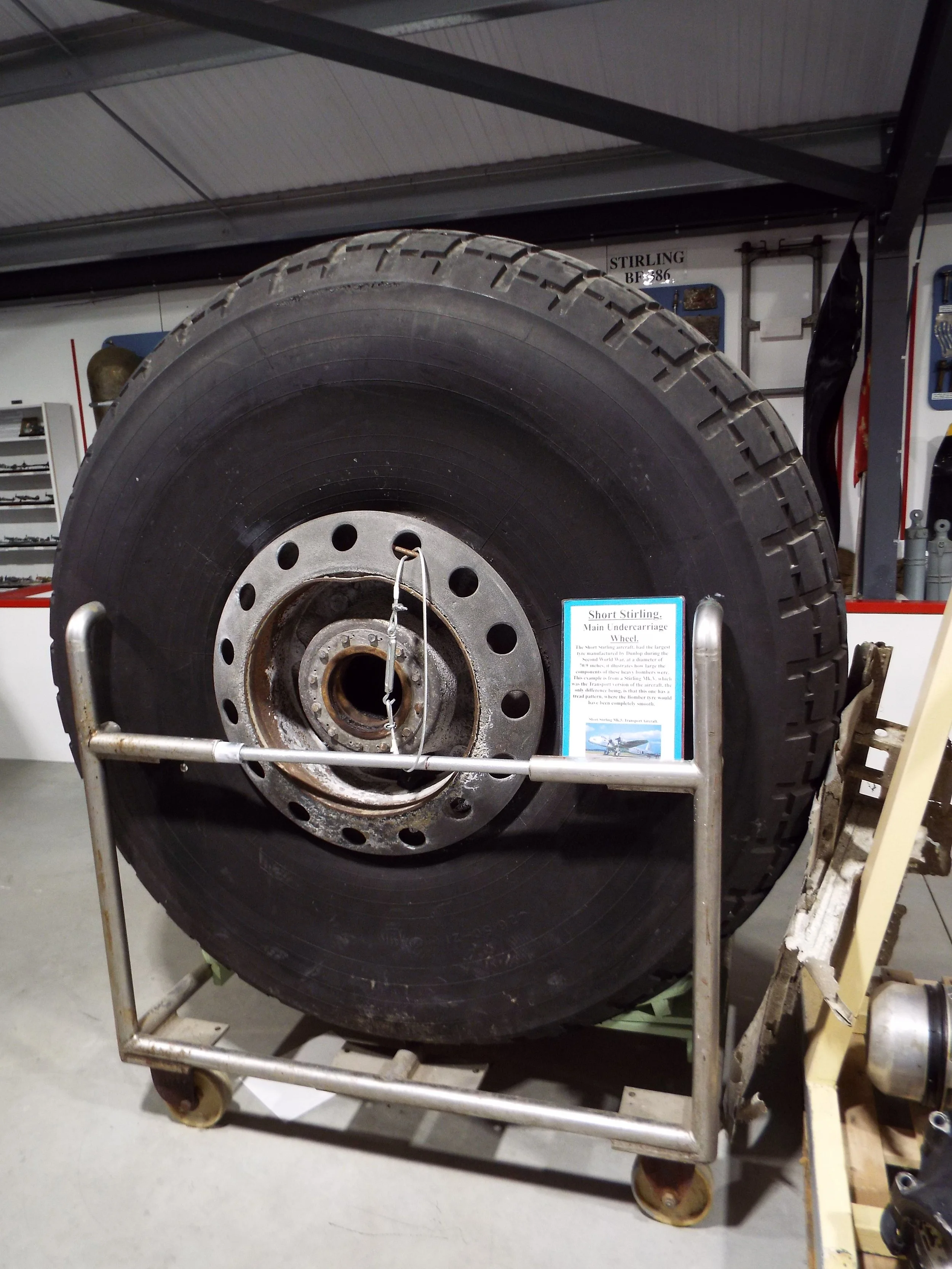
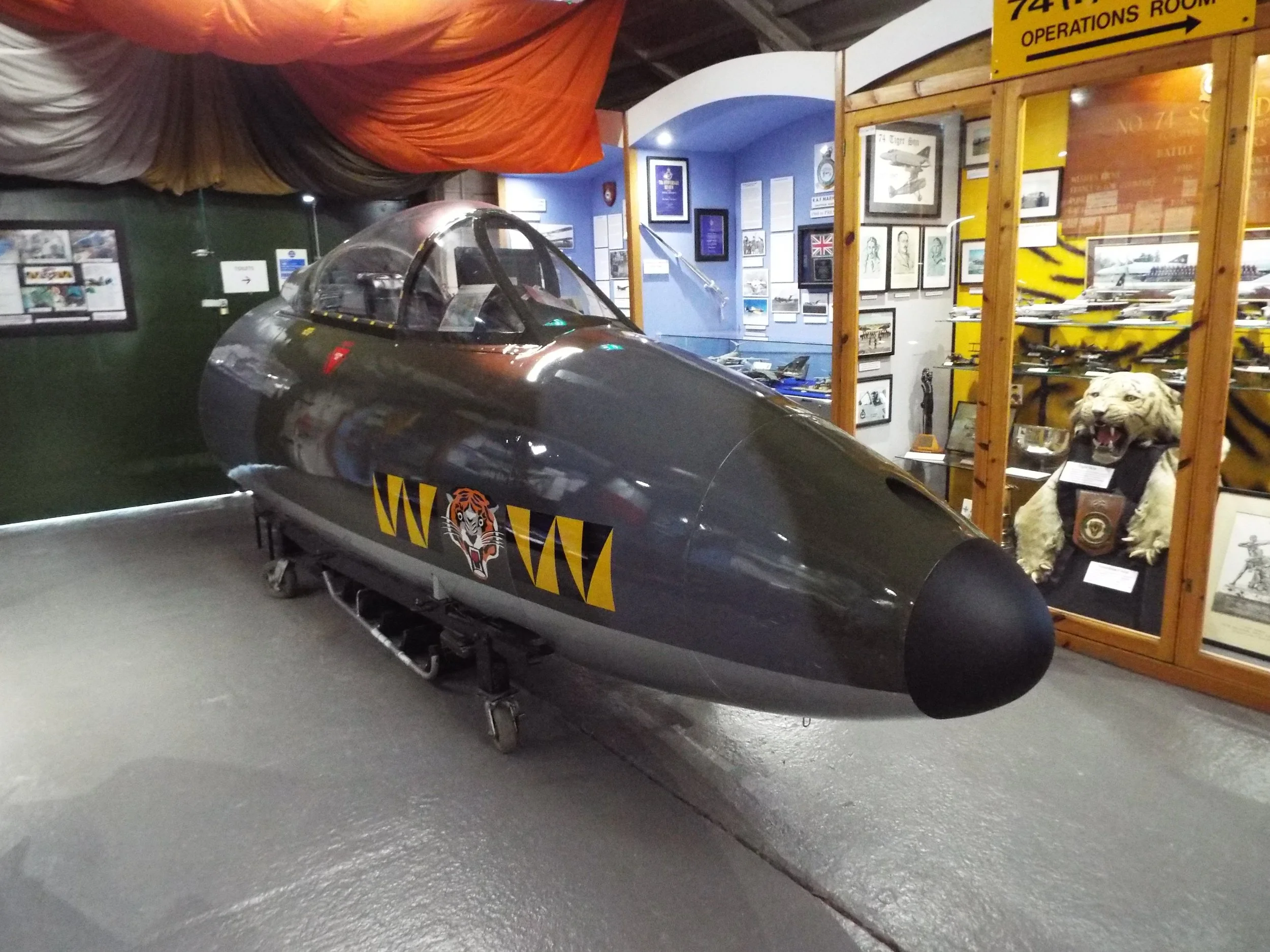
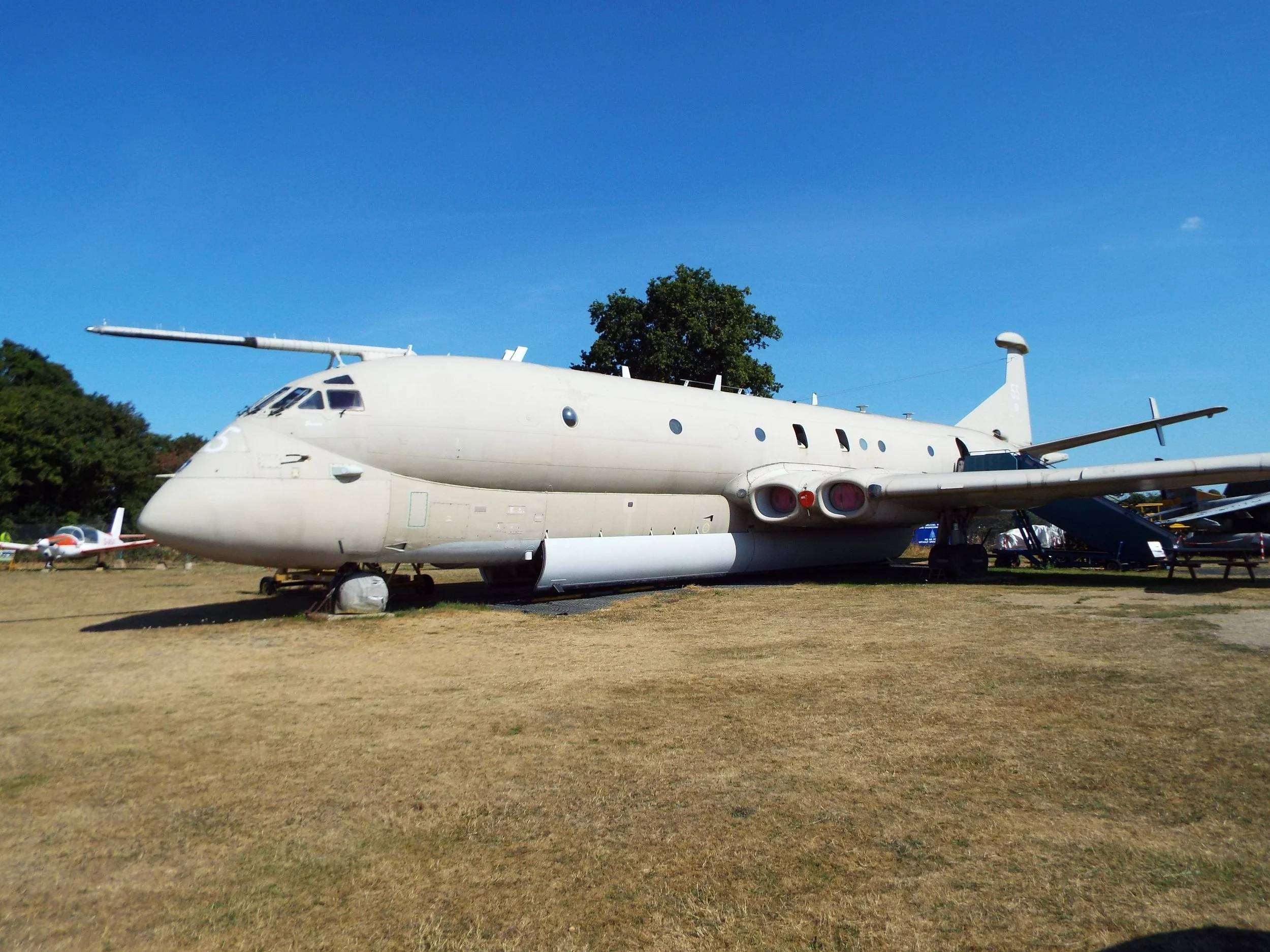
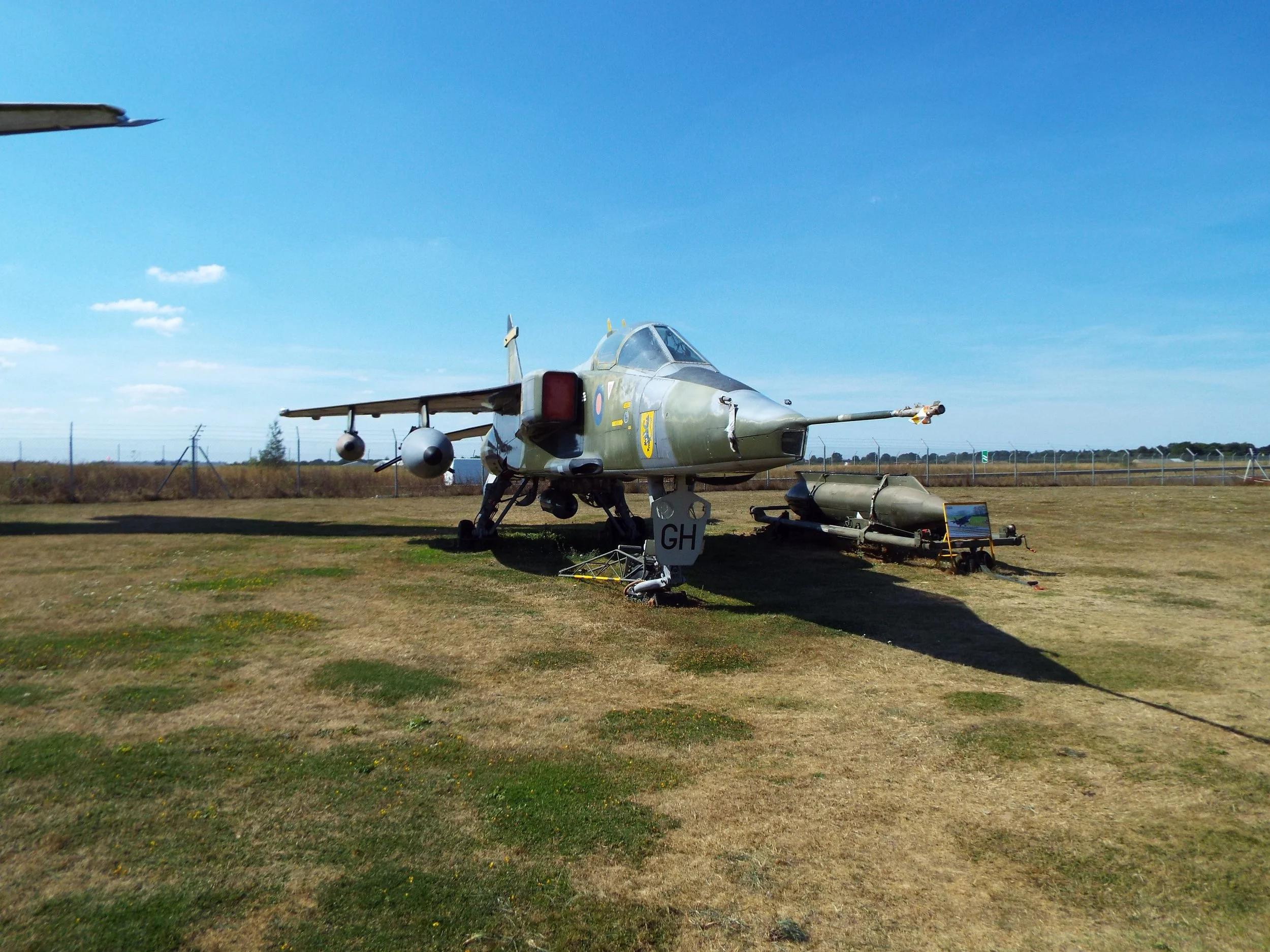
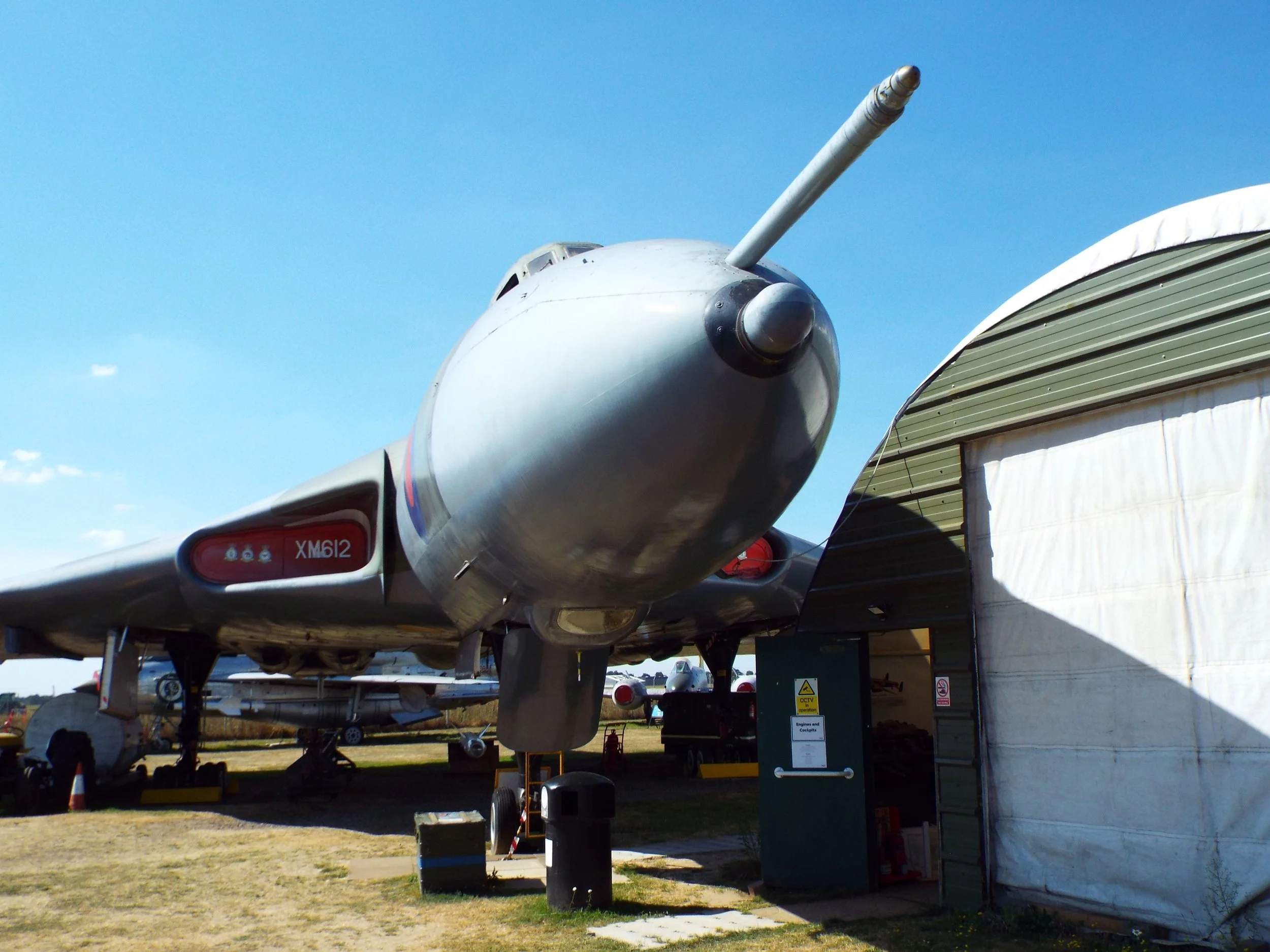
None of these flew with 100 Group, of course. They belong to later chapters of British aviation history. Roy Chadwick, the renowned aircraft designer, links the famous Avro Lancaster heavy bomber of World War Two to the Avro Vulcan of the atomic era. However, he was tragically killed in a crash in 1947, so he never saw the delta-wing V-bomber enter service.
Regrettably, some of the aircraft on display are looking a little weather-beaten. Aircraft left outside face severe weather degradation, including exterior paint fading and peeling from UV radiation, metal corrosion and rust from rain and humidity, rubber seal drying and cracking from temperature extremes, and structural damage from hail, high winds, or accumulated ice and snow.
I don't have any specific information about the museum's finances or resources. However, seeing the aircraft exposed to the blistering sun reminded me of the de Havilland Aircraft Museum in London Colney, which faced a similar challenge. They successfully secured funding for a new hangar through a £1.9 million grant from the National Lottery Heritage Fund.
Although the aircraft are weather-worn, they make for an impressive walk around the airfield perimeter. The guided tours of the Vulcan and Nimrod, run by volunteers, are worth the small extra fee. Unfortunately, I didn’t have time for a tour during this visit, but I plan to return. While my review of the museum may seem a bit nitpicky or overly critical, I want to emphasise that I highly recommend a visit. The museum is filled with fascinating exhibits and is staffed by friendly, knowledgeable, and passionate volunteers.
Blickling Hall and RAF Oulton
From Norwich I drove north to Blickling Hall, a National Trust property a few miles from Aylsham. Blickling is famous first for its Jacobean architecture and its link to Anne Boleyn, who may have been born on the estate. But for anyone interested in the history of 100 Group, its wartime story matters just as much.
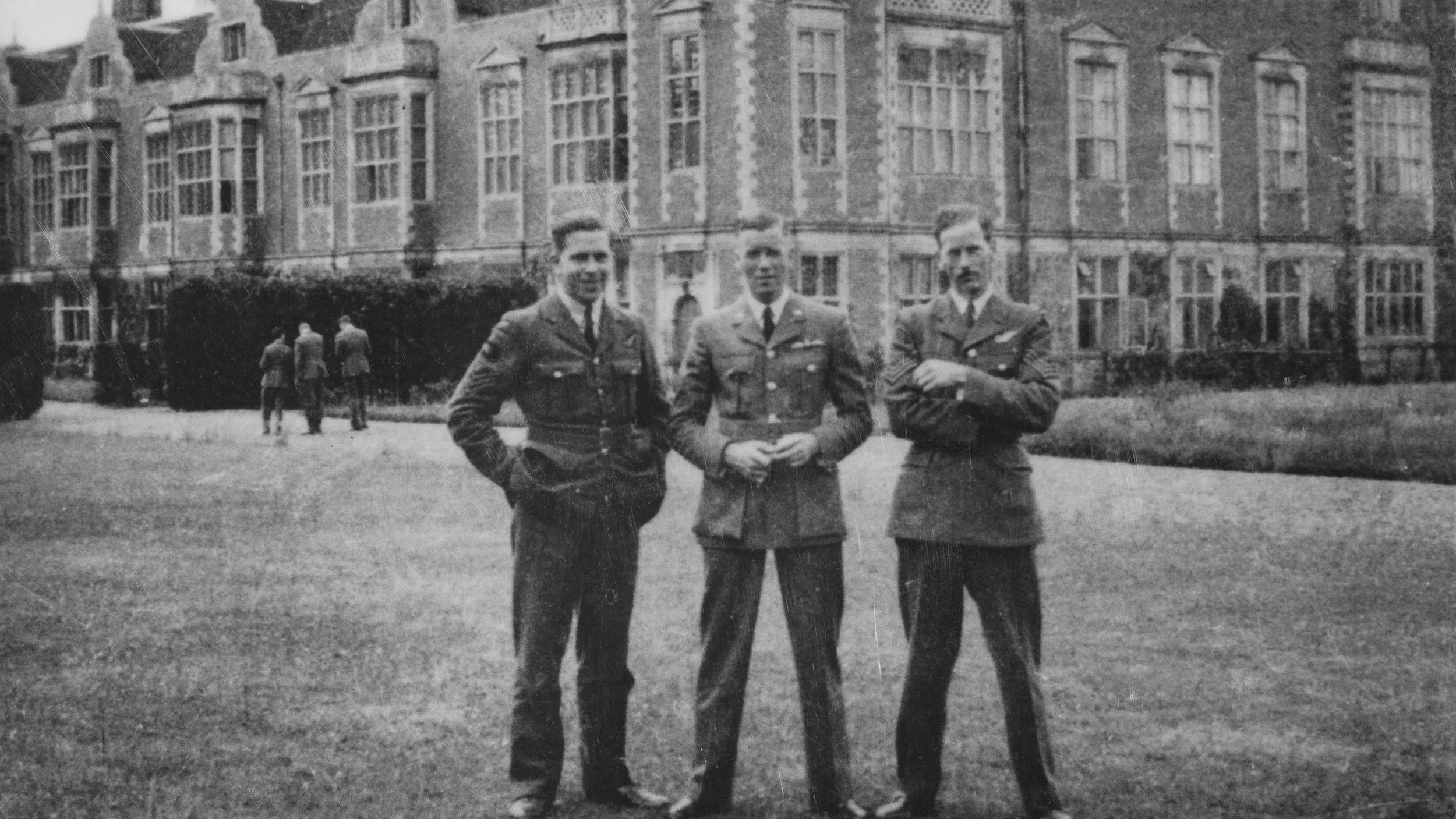
During the Second World War, Blickling Estate became home to RAF Oulton, a bomber airfield built on the grounds. Between 1939 and 1943, squadrons of No. 2 Group flew continental bombing raids from grass runways here. Aircrew were billeted in the Hall itself and in Nissen huts across the grounds. In 1944, the grass gave way to concrete, and the upgraded airfield could then take the heavier aircraft of No. 100 Group. From here, squadrons flew radio countermeasure operations that jammed enemy radar, work that played a vital role in the success of D-Day and raids throughout 1944 and 1945.
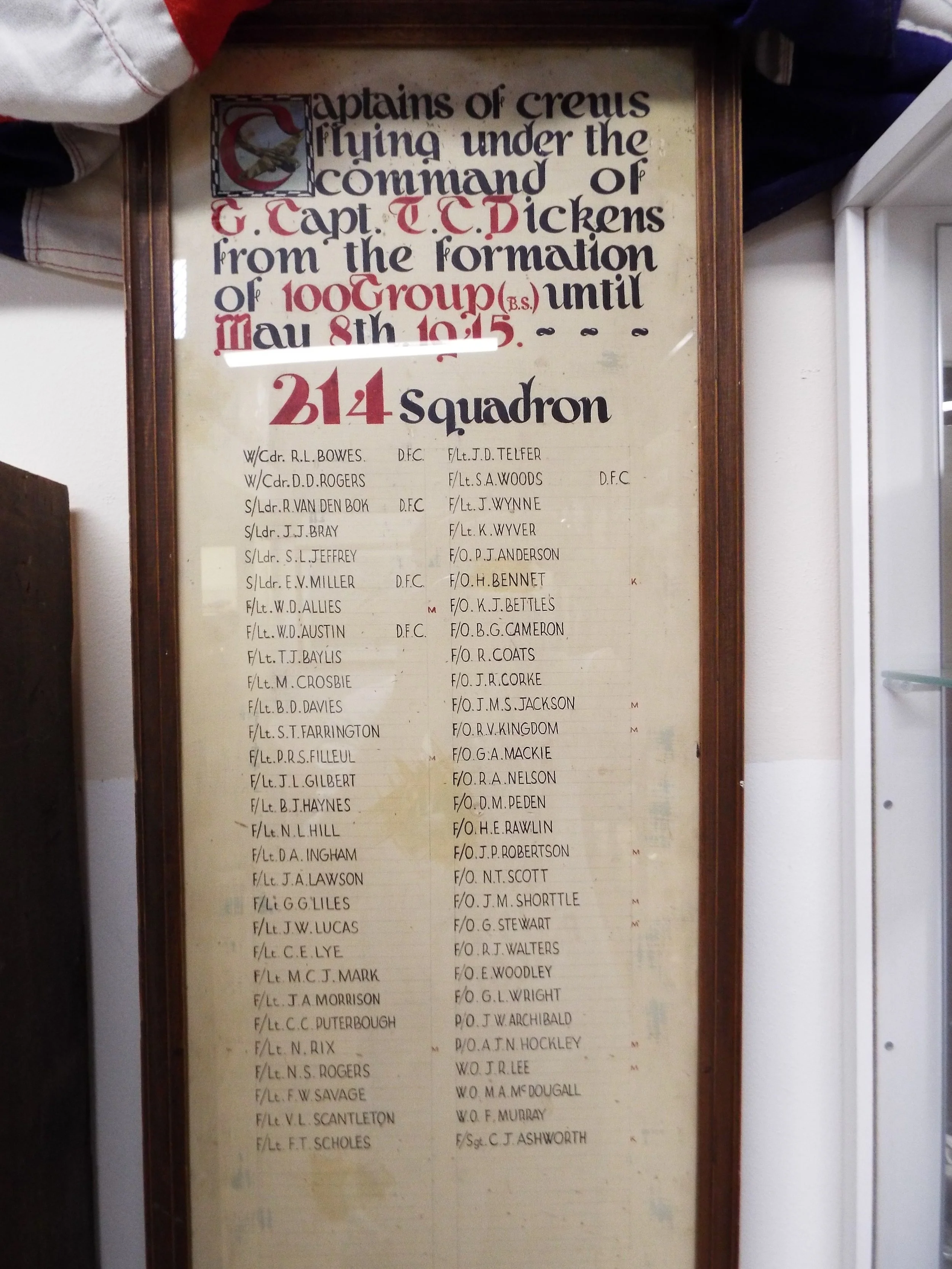
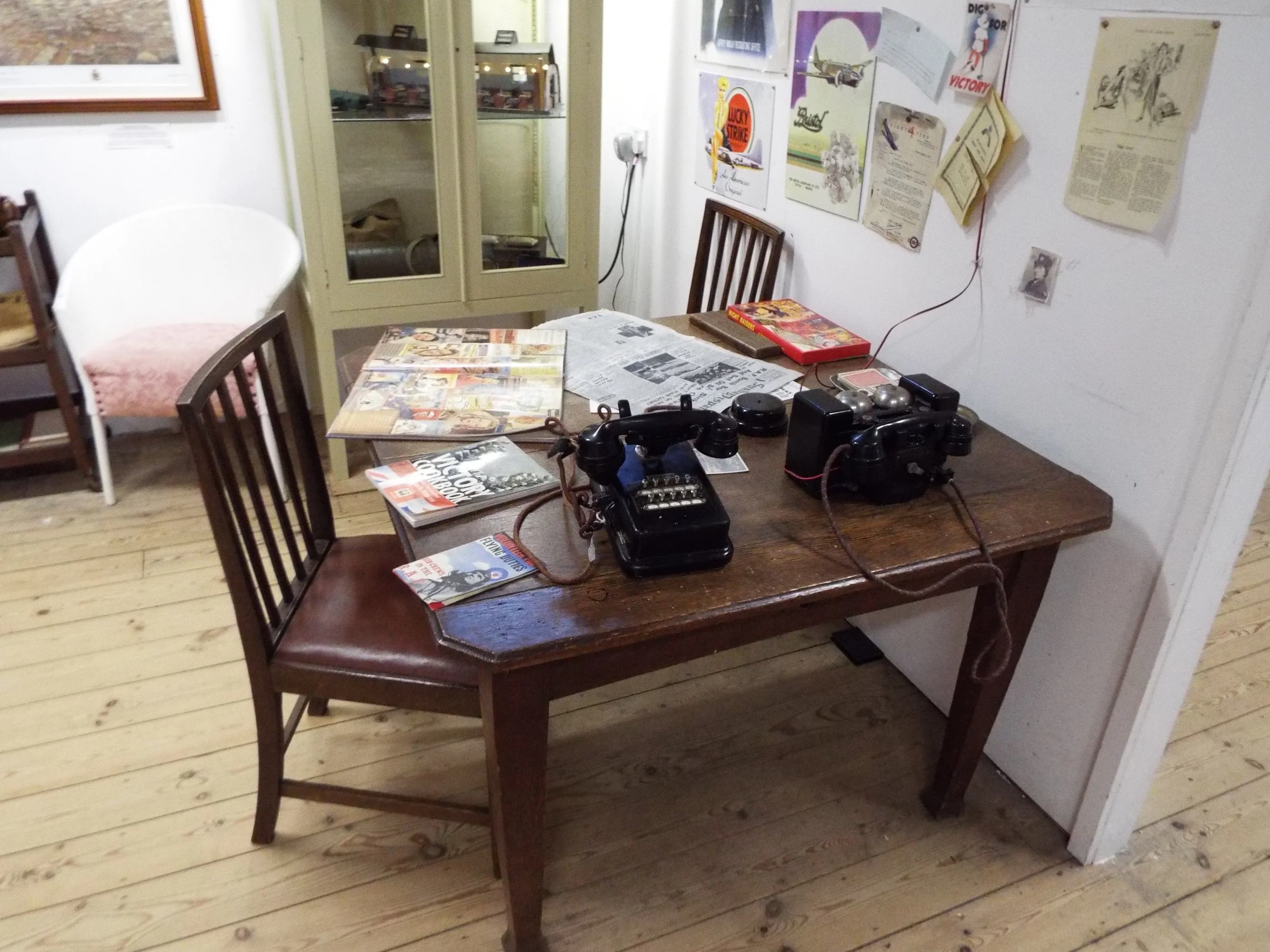
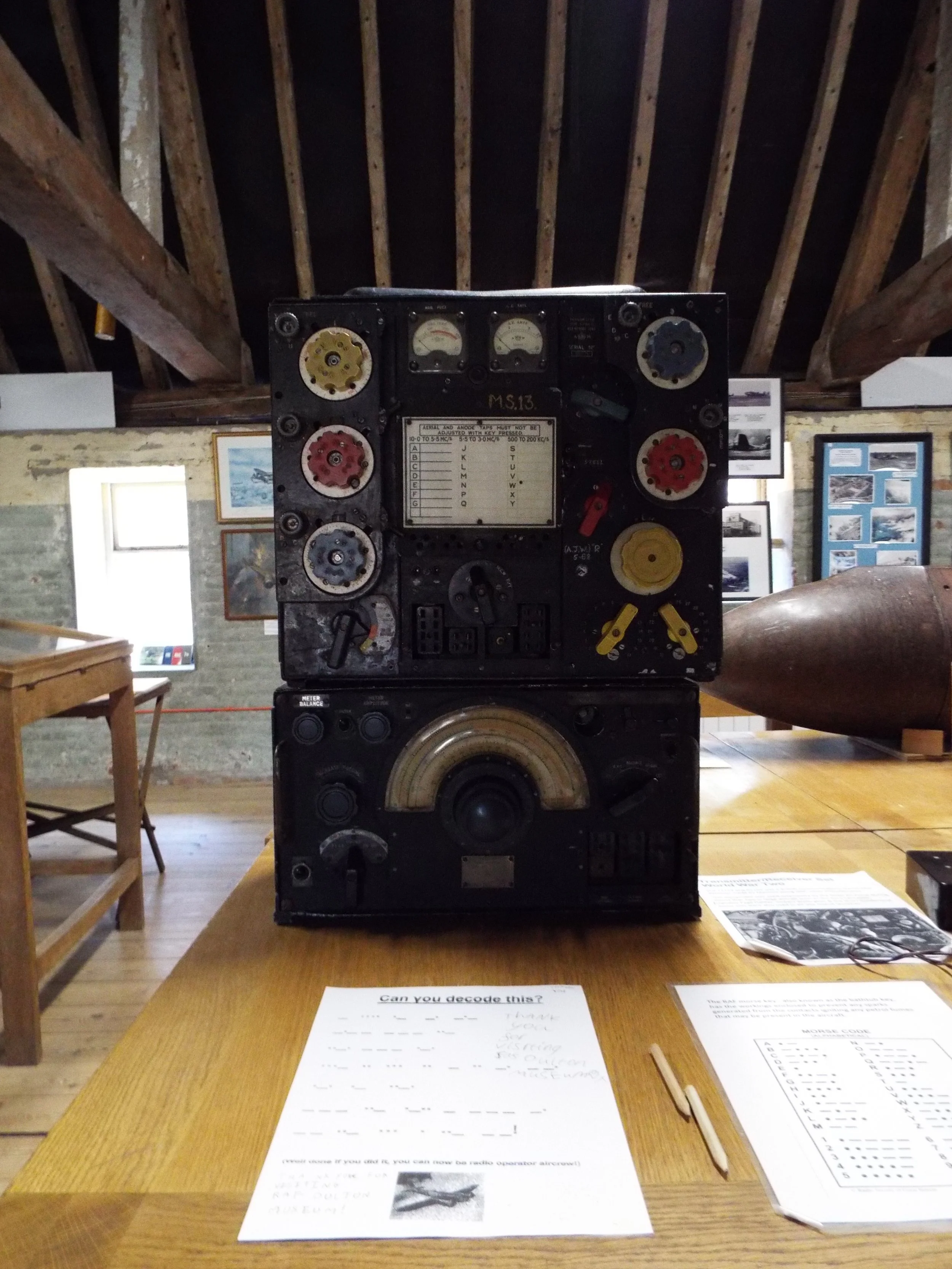
The RAF Oulton Museum
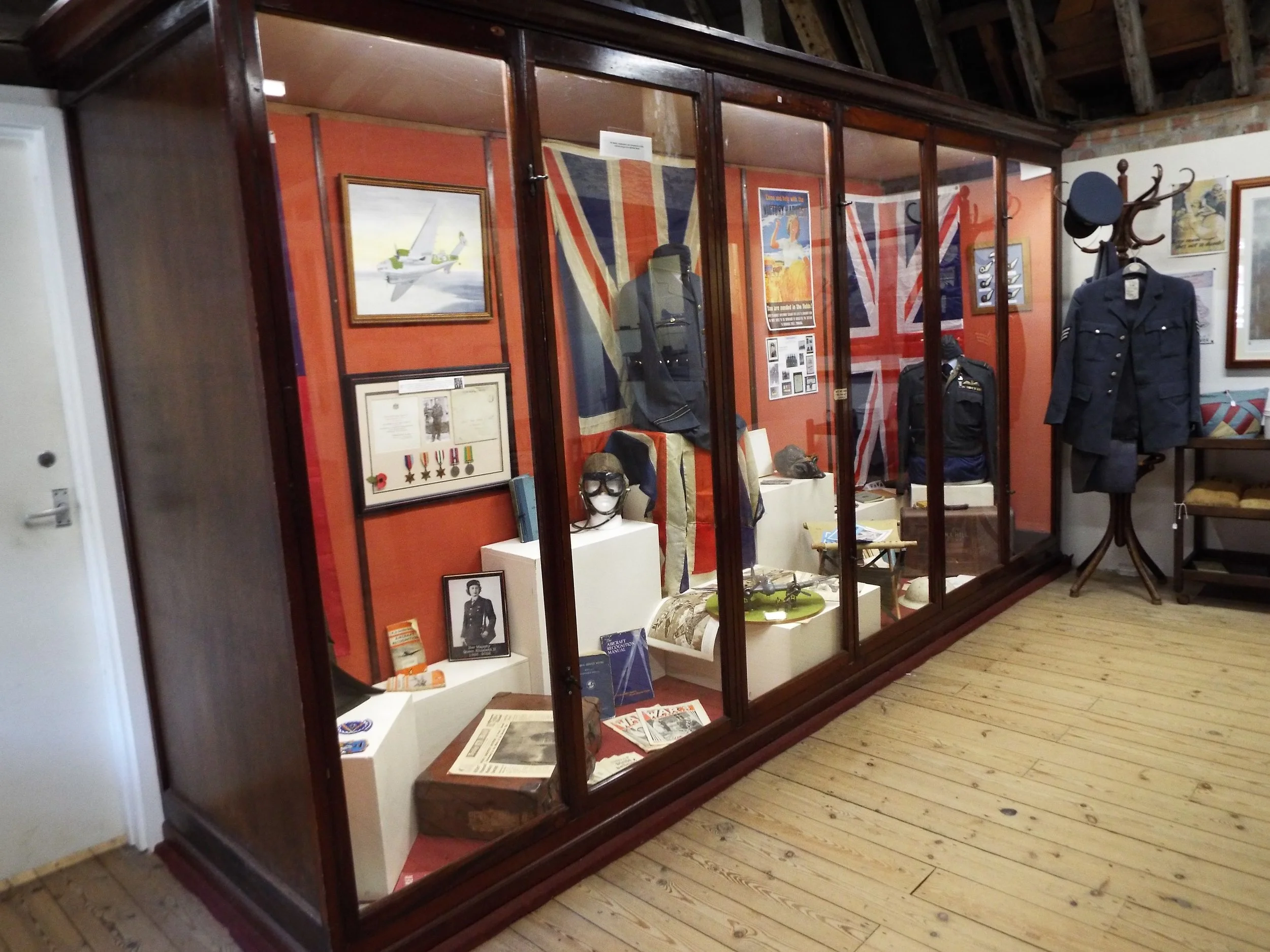
The RAF Oulton Museum is housed in the East Wing of Blickling Hall, once the Officers' Mess. It occupies rooms that provided billets for aircrew during the war, as we know from surviving records, photographs, and graffiti left by the men themselves.
Before entering the museum proper, it’s worth taking the time to watch a short explanatory film about RAF Oulton, its operational role and personnel.
Visitors can explore a mock ‘crew room’. Whilst on operations, crews would spend time before and after each flight in a room designed to lower stress and improve morale. It also became an informal office for men writing letters and doing minor chores.
The museum's collection of objects, uniforms, documents and personal stories, donated by families of those who served, adds real depth. Overall, the little museum is a fascinating and informative space that offers insight into both RAF Oulton’s history and everyday life during the Second World War.
Please note that the museum is closed over the winter, so it is advisable to check opening times before you travel.
The Village of Oulton and Its Memorial
A short drive from Blickling Hall is the hamlet of Oulton itself, once the site of the airfield proper. RAF Oulton opened as a satellite landing ground for the main station at Horsham St Faith. After the war it closed for flying in 1946 and was fully decommissioned by 1949. Almost nothing of the airfield survives today. Much of the land returned to farming.
Located at a crossroads on the edge of the village is a memorial to RAF Oulton: a simple granite tablet set on a brick plinth. The memorial carries the RAF crest and motto Per Ardua Ad Astra (Through struggle to the stars), and it names every squadron that served here: 18, 21, 88, 114, 139, 214, 223 and 236 Squadrons, along with 1428 and 1699 Conversion Flights, the 8th United States Army Air Forces and the 803rd Bombardment Squadron. Fifty-six Bomber Command aircraft were lost flying from Oulton across the war, including sixteen B-17s of the type flown by the 214 Squadron. I stood at the memorial for a while, then took a short walk around the quiet village before heading home.
Lest We Forget
On a hot Saturday in August, with the roads busy with day trippers, it’s all too easy to forget that many of the picturesque towns and villages of East Anglia played host to temporary wartime air stations. East Anglia also hosted around 350,000 American soldiers and aircrew in what became known as the ‘friendly invasion’. Bomber Command crews came from over 60 different countries, and it was common for squadrons and crews to be comprised of numerous nationalities.
Approximately 125,000 men served as Bomber Command aircrew, 69.2 per cent of them British, the rest from the Commonwealth and occupied European countries. Of these, 47,305 were killed in action or died while prisoners of war. Fortunately, East Anglia is home to a variety of small independent museums, along with the Imperial War Museum (IWM) Duxford, Cambridge American Cemetery and Memorial, National Trust, and English Heritage sites. Dedicated volunteers work tirelessly to preserve local heritage, engage and educate visitors, and carry out daily acts of remembrance, lest we forget.
Planning Your Own Visit
If you want to follow this route yourself, here is where to start.
The City of Norwich Aviation Museum sits just off the A140 near Norwich Airport, with free parking and a café on site. Full opening times and admission details are at cnam.org.uk.
Blickling Hall and its estate are run by the National Trust, near Aylsham in Norfolk. Details on visiting the Hall, gardens and grounds are at nationaltrust.org.uk/visit/norfolk/blickling-estate. The RAF Oulton Museum, in the East Wing, has its own seasonal opening hours, listed at nationaltrust.org.uk/visit/norfolk/blickling-estate/raf-oulton-museum-at-blickling-estate. Entry to the National Trust estate normally requires membership or a paid ticket.
The village of Oulton lies a short drive from Blickling, and the memorial stands freely accessible at the road junction described on the Imperial War Museum's War Memorials Register at memorials.iwm.org.uk/memorial/19722.
Together, these three stops give a rounded picture of 100 Group's presence in Norfolk: the aircraft and archive at Norwich, the crew's daily life at Blickling, and the quiet memorial that now marks where the airfield once stood.
References
City of Norwich Aviation Museum: https://www.cnam.org.uk/
National Trust, "History of Blickling Estate": https://www.nationaltrust.org.uk/visit/norfolk/blickling-estate/history-of-the-blickling-estate
National Trust, "RAF Oulton Museum at Blickling Estate": https://www.nationaltrust.org.uk/visit/norfolk/blickling-estate/raf-oulton-museum-at-blickling-estate
No. 214 Squadron Association, "Bases: Oulton and Blickling Hall": https://www.214squadron.org.uk/Bases/Bases_Oulton_Blickling.htm
Wing Commander T G "Jeff" Jefferson site, "No.18 Squadron, RAF Oulton": https://wingcotomjefferson.wordpress.com/no-18-squadron-oulton/
Imperial War Museums, War Memorials Register, "RAF Oulton - WW2": https://memorials.iwm.org.uk/memorial/19722

Legasee's Mission to Record Britain's Berlin Airlift Veterans
Dick Arscott passed away in 2020. Only after his passing, did his granddaughter Kate discover the full extent of his service as an RAF pilot during the Berlin Airlift through a 2013 interview he gave to Legasee Educational Trust. That interview has now been brought to life in a powerful new podcast series, sharing Dick's voice and those of other veterans with a new generation.
The Berlin Blockade and Airlift of 1948-49 has faded from the public consciousness, but this pivotal Cold War mission kept a city alive and a war at bay. Through their work preserving veteran testimonies, Legasee ensures these crucial voices continue to educate and inspire future generations.
In 1982, the TV series Airline appeared on our screens. The series was set in post-war Britain and followed the exploits of Jack Ruskin (played by Roy Marsden), a former RAF pilot who starts his own air transport business. In the final episode of the series, Too Many Promises, the Berlin Airlift offers Ruskin an opportunity to save his fledgling company from financial ruin. Unfortunately, the planned second series of Airline was cancelled, and the viewing public never got to find out if Jack Ruskin succeeded.
The Berlin Blockade and Airlift of 1948-49 represented the first major confrontation of the Cold War, yet this pivotal humanitarian mission has faded from the public consciousness. The only feature film on the subject, The Big Lift (1950), which starred Montgomery Clift and Paul Douglas, is a curious piece of cinema history, also forgotten. The film, shot on location in Berlin, offers a rare, authentic glimpse of the city’s devastation, resilience, and Cold War realities.
Today, the UK’s Legasee Educational Trust, a registered charity dedicated to preserving the stories of British military veterans through filmed interviews, has returned to the subject of the Berlin Airlift.


The Forgotten Crisis of 1948
The Berlin Blockade emerged from mounting tensions following the Yalta Conference of February 1945, where the USA, Great Britain and USSR discussed the reorganisation of post-war Europe. Perhaps inevitably, Berlin proved a flashpoint in the developing Cold War.
Since the end of the war in Europe in May 1945, Germany had been divided into four zones of occupation, each controlled by one of the Allies. The German capital, Berlin, lay inside the Russian zone and was also divided into four zones of occupation. Access to Berlin for the Allies was by way of road, rail and canals, and via three specific air corridors.
Soviet leader Joseph Stalin wanted to keep Germany weak and use it as a buffer zone between the USSR and the West. The Western powers saw things differently. Learning lessons from the Treaty of Versailles, they did not want to see Germany financially crippled again. This meant introducing a new, stable currency and more jobs for workers in the Western sectors.
The crisis escalated when the Western Allies began using Marshall Aid funds to rebuild the German economy, introduced stable currency, and created 'Bizonia' by joining the British and American zones in 1947. On 24 June 1948, Stalin responded by cutting all land access to Berlin, leaving the city accessible only by air and creating critical shortages - West Berlin possessed merely 36 days' worth of food supplies.
The Berlin Airlift represented the first practical test of American containment policy to prevent the spread of communism. Rather than forcing passage by land and risking another war, the Allies chose to supply their sectors through air corridors. This operation continued for eleven months until the blockade's conclusion in May 1949.
Operation Plainfare: Britain’s Contribution
Despite the scale of the operation, the British contribution has often been overlooked. At the airlift's height, aircraft landed at Berlin's Templehof Airport every minute, with the operation costing the USA $350 million and Britain £17 million. The Allies initially aimed to transport 4,500 tons of supplies daily, increasing this target to 5,000 tons by autumn 1948, with coal comprising a substantial portion of the tonnage required for the city's energy needs.
British forces mobilised the Royal Air Force and contracted twenty-five additional charter companies to transport primarily oil and gasoline into the city. Beyond their approximately 23 per cent share of total freight tonnage, the British assumed responsibility for the majority of passenger transport during the blockade.
Legasee's Archive of Service
Legasee was founded by Martin Bisiker, a videographer whose personal mission began when his grandfather passed away without sharing his experiences as a Desert Rat. The organisation has created the largest freely available film archive of British military veterans online, conducting filmed interviews that capture stories in veterans’ own words.
Between 2012 and 2013, with support from the Heritage Lottery Fund, Legasee captured fifty interviews with British veterans who participated in the airlift - pilots, ground crew, engineers, and support staff. Working alongside the British Berlin Airlift Association, the Norfolk & Suffolk Aviation Museum, and Bungay High School, the project created a permanent exhibition commemorating the 65th anniversary of the airlift.


Individual Stories of Service
The recently launched podcast series The Veterans' Voice: Berlin Airlift draws from these archived interviews. The four-episode series chronicles the progression from rising tensions through ultimate victory in the skies:
Episode 1 features Terence Crowley, Jean Eastham, Tom Holland, Tom Henshaw and Fred Danckwardt recalling the uncertain atmosphere of post-war Germany and early signs of the looming blockade. Episode 2 covers the immediate response to the June 1948 blockade, with veterans Jean Eastham, Leo Hatcher, David Edwards, Len Hurst, Tom Holland and Fred Danckwardt describing the chaos, pressure and resolve of those initial days.
The third episode documents the winter escalation, as John Eddy, Dick Arscott, Leo Hatcher, Larry Lamb, David Edwards and Fred Danckwardt recount the operation's massive scale, dangerous flying conditions, and essential camaraderie. The final episode features Tom Holland, John Curtis, Dick Arscott, Fred Danckwardt, Freddie Montgomery and William Ball reflecting on the airlift's ultimate success and their later welcome back to Berlin by the people whose lives they had helped preserve.


Dick Arscott's Legacy
Among these voices stands that of Dick Arscott, whose story exemplifies both the operation's human dimension and the challenge of preserving veteran testimony. Arscott was one of the RAF pilots flying Dakotas into Berlin's precarious corridors, enduring freezing conditions, constant Soviet harassment, and relentless pressure while maintaining professionalism and determination.
Arscott passed away in 2020 during the COVID-19 pandemic, when restrictions meant only his children and their partners could attend his funeral. His granddaughter Kate discovered the full extent of his service through his 2013 Legasee interview. She noted: “To us, he was just Grandpa... Family was at the heart of his life, and gatherings were filled with his steady presence, gentle humour, and stories that rarely touched on his wartime experiences”.
The interview revealed previously unshared details of Arscott’s character, including an incident where “he once flew a Meteor jet under the Clifton Suspension Bridge, an act for which he was 'severely reprimanded', but which brings a smile to the family.” Kate Arscott observed: “He also used to borrow an aircraft just to fly home and see my grandma for the weekend. It's typical of the devotion and quiet daring that defined him.”
Watch A Veteran Interview with Dick Arscott. Interview by Martin Bisiker. Legasee, 9 Nov. 2012.
West Germany and the Soviet Collapse
The Cold War nation of West Germany, officially known as the Federal Republic of Germany, was established on 23 May 1949, by a declaration of the German Parliamentary Council, which represented the former zones of occupation held by the United States, Great Britain, and France after World War II. West Germany was an essential part of the American and Western European economic and military shield against the Soviets and their Eastern European satellites during the decades of the Cold War.
Forty years and six months later, the fall of the Berlin Wall on 9 November 1989 marked the beginning of the end of the Cold War and the Soviet Union. Soviet-occupied East Germany, officially known as the German Democratic Republic, was reunited with West Germany on 3 October 1990. The Soviet Union collapsed a year later. Regrettably, the initial optimism that surrounded the collapse of the USSR quickly dissipated in a storm of economic instability, corruption, political, ethnic and nationalistic tensions and violence.
Preserving Historical Memory
Martin Bisiker, Legasee's founder, emphasised the broader significance: “Dick was part of one of the greatest logistical efforts in modern history, but the individual stories of those men and women who served are rarely told.” The Berlin Airlift succeeded without military force, resolving the first Cold War crisis through logistical means, though not without casualties - at least 78 people died in aircraft accidents, their names engraved on the Airlift Memorial in Berlin's Tempelhof district.
Legasee's mission remains essential: these stories represent “primary source material that offer unique insights into military service, personal resilience, and the social history of their times.” As the generation that lived through these events passes away, organisations like Legasee provide the crucial link, ensuring their experiences continue to educate and inspire future generations.
The project received support from The National Lottery Heritage Fund and the Armed Forces Covenant Fund Trust, reflecting recognition of the urgent need to “record and share the lived experiences of British veterans before they are lost to time.” Through their work, individual voices like Dick Arscott's continue speaking to new audiences, preserving both the operational history and human dimension of this defining Cold War episode.
The Veterans' Voice: Berlin Airlift podcast series is available on major platforms, accompanied by the complete digital archive of filmed interviews at www.Legasee.org.uk.
References:

The Fleet Air Arm’s Solution to the Corsair’s Problem
The Vought F4U Corsair's journey from a flawed carrier-based fighter to a WWII ace offers powerful lessons for businesses facing seemingly insurmountable challenges. Through innovative thinking, adaptability, and focusing on process changes rather than expensive redesigns, the Corsair's transformation demonstrates how companies can turn potential failures into remarkable successes.

Vought F4U Corsair, IWM Duxford, Flying Legends 2018
The story of the Vought F4U Corsair’s development and eventual success provides valuable insights for businesses facing seemingly insurmountable challenges. Initially designed as a carrier-based fighter, the Corsair’s long nose and consequent poor forward visibility made it notoriously difficult to land on aircraft carriers, leading to several accidents.
Why did Britain use the American F4U Corsairs? The complete story
This situation mirrors a common business scenario: a product designed for a specific purpose that fails to meet critical requirements in real-world application. Many companies might have scrapped the project or invested heavily in redesigning the aircraft or modifying carriers - both expensive and time-consuming solutions.
However, the British Fleet Air Arm developed an innovative approach that transformed the Corsair’s fortunes without significant modifications to either the plane or the carriers. They introduced a new landing technique, a wide curving approach, which compensated for the limited visibility. The British also made several small technical modifications to the aircraft, such as raising the pilots' seat and a new canopy that provided better visibility.
These creative solutions offer several key lessons for businesses:
1. Innovation doesn’t always require starting from scratch. Sometimes, the most effective solutions involve changing processes or approaches rather than the product itself.
2. Cross-functional collaboration can lead to breakthrough solutions. The British solution came from operational experience rather than engineering, highlighting the value of diverse perspectives in problem-solving.
3. Customer feedback and real-world testing are crucial. The Corsair’s issues only became apparent in actual carrier operations, underscoring the importance of thorough, real-world product testing.
4. Adaptability is key to success. Rather than abandoning the Corsair as a carrier-borne aircraft, the British found ways to adapt its used to overcome its limitations.
5. Sometimes, the most cost-effective solutions are the simplest. The British approach avoided expensive redesigns or modifications, offering a cost-effective solution to a complex problem.
6. Training and skill development can overcome product limitations. By focusing on pilot training and developing new techniques, the British turned a liability into an asset.
The Corsair’s journey from problematic design to successful deployment demonstrates that, with innovative thinking, collaboration, and a willingness to adapt, businesses can overcome significant challenges and turn potential failures into successes. It's a powerful reminder that the solution to a problem may not always lie in changing the product, but in changing how we use it.
Businesses can gain valuable insights from military history that can enhance their strategic planning and operational efficiency. Lessons learned from past conflicts highlight the importance of adaptability, leadership, and the effective allocation of resources. By understanding how military strategies and tactics can be applied to the corporate world, organisations can improve decision-making, strengthen team cohesion, and navigate challenges more effectively. If your business is interested in exploring these lessons further, please reach out for a consultation.
Contact me to learn more about how military history can inform your business strategy.

D-Day 75: Daks Over Duxford
Watch our highlights video of the IWM Duxford’s Daks Over Duxford event as part of the 75th-anniversary commemorations of the D-Day landing of June 6 1944. The largest collection of Douglas C-47 Skytrain and DC-3 aircraft since World War Two. Ten aircraft flew sticks of paratroops over to Normandy for a mass parachute drop. We have also published 57 photos from the Daks Over Duxford event.
As part of IWM’s D-Day 75th anniversary week, Daks over Duxford told the extraordinary story of D-Day, uniting the greatest number of Douglas C-47 Skytrain and Dakota aircraft in one location since the Second World War. Synonymous with the D-Day Landings, more than 30 'Daks' descended upon IWM Duxford.
Mass parachute jumps and flight displays took place across the museum ahead of the epic cross-channel flight to Normandy on 5 June. On the ground, D-Day-related displays and activities brought the extraordinary story of D-Day to life.
In fact, 21 DC-3s and Douglas C-47s finally went to Normandy, ten of the aircraft carrying sticks of paratroopers for a mass drop as part of the Daks Over Normandy commemorations across the Channel. In reality, 1200 Douglas C-47s were used for D-Day. As well as the Daks, a P-47 Thunderbolt, two Mk 9 Spitfires and two P-51 Mustangs performed aerial displays. There was also a very impressive flypast by a collection of USAF C-130s and V-22 Osprey modern aircraft.
DDay 75: Daks Over Duxford Photography

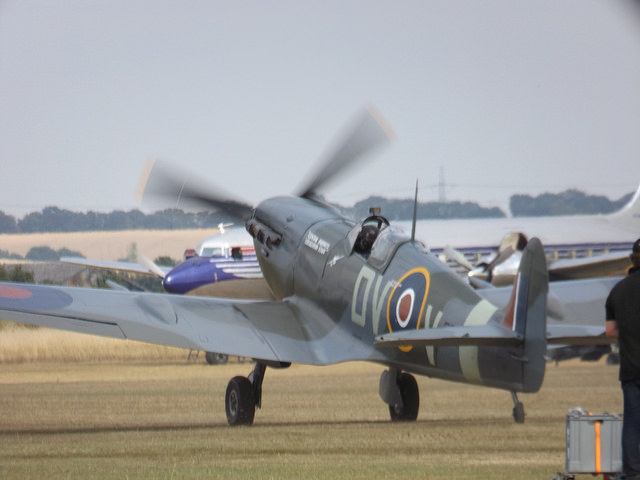
Spitfire September
In this post, we review a Spitfire September. First, we take a look at the new Spitfire documentary film. Next, the Battle of Britain Air Show at IWM Duxford, and finally, John Nichol’s book, Spitfire: a Very British Love Story. Tally-Ho!
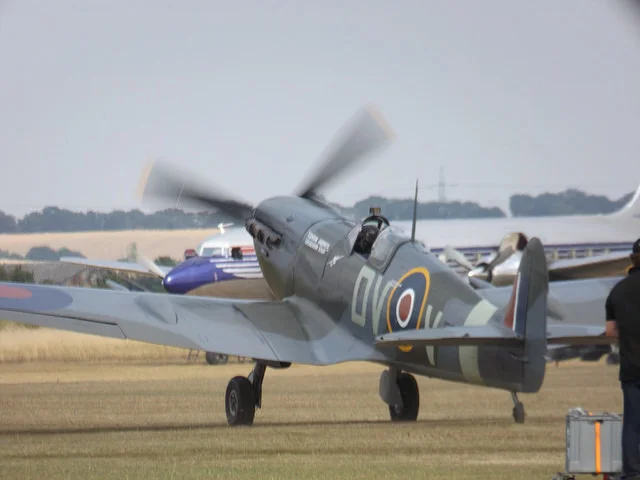
The 15th of September is Battle of Britain day. It commemorates a turning point in the struggle for aerial supremacy in the skies over Britain fought by the RAF and German Luftwaffe during the summer and autumn of 1940. German daylight raids would eventually cease by the end of October, and Operation Sealion, the German codename for the amphibious invasion of southern England, would be cancelled. It was Nazi Germany’s first significant defeat. A victory won by a handful of daring pilots from across the globe and two iconic aircraft: the Hawker Hurricane and Supermarine Spitfire. However, one aircraft would go on to capture the hearts and imagination of the nation. Since 1940, the Spitfire has become an enduring symbol of courage, fortitude, ingenuity and Britishness.
Spitfire – Inspiration of a Nation
My own little September love affair with the Spitfire started with the release of the documentary film Spitfire – Inspiration of a Nation, directed by David Fairhead and Ant Palmer. Narrated by Charles Dance, the film is a biography of both the aircraft and the men and women who flew it. The original music score by composer Chris Roe and mesmerising aerial photography by director John Dibbs work beautifully together. The film was the last onscreen interview given by Battle of Britain fighter pilot and author Geoffrey Wellum, DFC. The film is also the last testament of Mary Ellis, who flew 76 different types of aircraft during the war as part of the Air Transport Auxiliary (ATA). Ferrying aircraft between factories and operational squadrons, the ATA played a vital support role. During her career, Mary delivered over 400 Spitfires safely to their destinations. The film also features a sound recording of aero engineer and chief designer of the Spitfire, R.J. Mitchell, who died of cancer before his creation went into service. Spitfire is a great piece of documentary film-making, and definitely worth the purchase price.
Battle of Britain Air Show
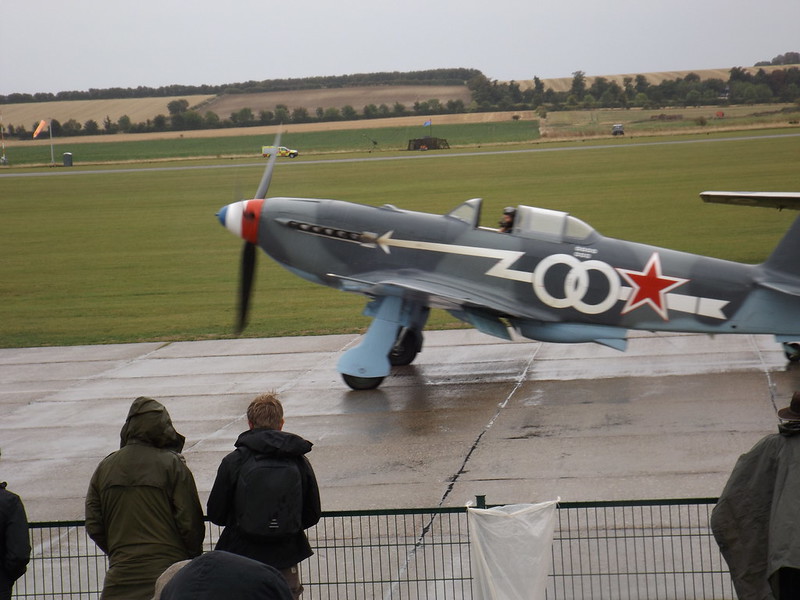
The last event to mark the centenary of the RAF’s first 100 years, the Battle of Britain Air Show was held at the IWM Duxford on the 22nd and 23rd of September, 2018. Unfortunately, the weather on Saturday was extremely challenging with heavy, persistent rain all afternoon. Nevertheless, the event organisers, aircraft owners and pilots did an excellent job. The show told the history of the RAF from its founding at the end of World War One to the modern day. Highlights of the display included two de Havilland Vampire jets, Battle of Britain Memorial Flight (Spitfire, Hurricane and Lancaster), a 617 Squadron flypast (Tornado GR4, new F-35 Lightning II and Avro Lancaster) and the Red Arrows. The show closed with a formation of 18 Spitfires. We also got to see iconic warbirds such as the P-51D Mustang, Boeing B-17 Flying Fortress, Catalina seaplane, Westland Lysander and Soviet Yak 3. Sadly, the MiG-15 was not able to fly due to adverse weather conditions. The Battle of Britain Air Show was a very impressive event, and one I would highly recommend. There’s nothing like seeing 18 Spitfires take to the sky, and listening to the combined roar of all those Merlin and Griffon engines.
Spitfire: a Very British Love Story
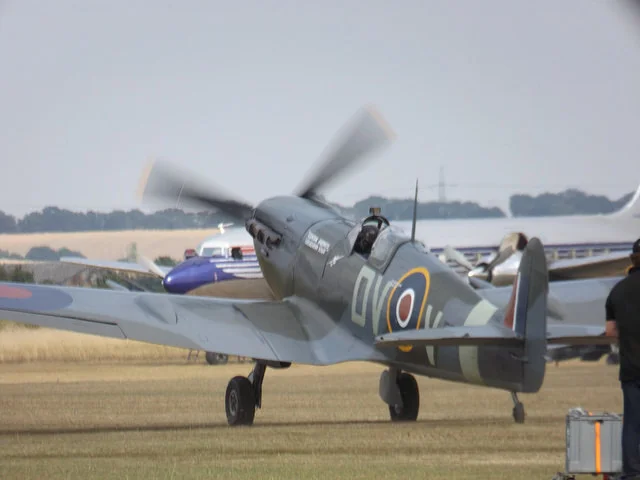
Finally, I finished my Spitfire September by reading John Nichol’s book Spitfire: a Very British Love Story. A former RAF pilot, John Nichol knows a thing or two about aerial combat. During the 1991 Gulf War, he was shot down, captured and tortured by Iraqi forces. His book examines the Spitfire’s origins and continued development during the war years when the threat from new enemy aircraft demanded constant innovation. When the Spitfire was finally retired from RAF service in 1957 there had been 47 variants including the Fleet Air Arm’s Seafires. However, the book is really a collection of stories about the different roles the Spitfire played in the lives of frontline pilots such as Allan Scott and Hugh ‘Cocky’ Dundas, and ATA pilots like Diana Barnato Walker. Sadly, unlike the beloved Spitfire, the veterans of the conflict do not endure. John Nichol interviewed around 40 veterans over a three-year period of research and writing his book. By the time it was published only three were still with us. Soon the “greatest generation” will be gone forever, but while Spitfires continue to fly, let us hope they will never be forgotten.